Meta put the weights for Muse Spark Open on Hugging Face on October 15. 816 billion total parameters, 42 billion active, a million tokens of context, built for coding and agent work. Meta calls it the most capable US open-weight model so far.
A lot of the coverage led with “it runs on your desktop.” That part needs an asterisk roughly the size of a terabyte.
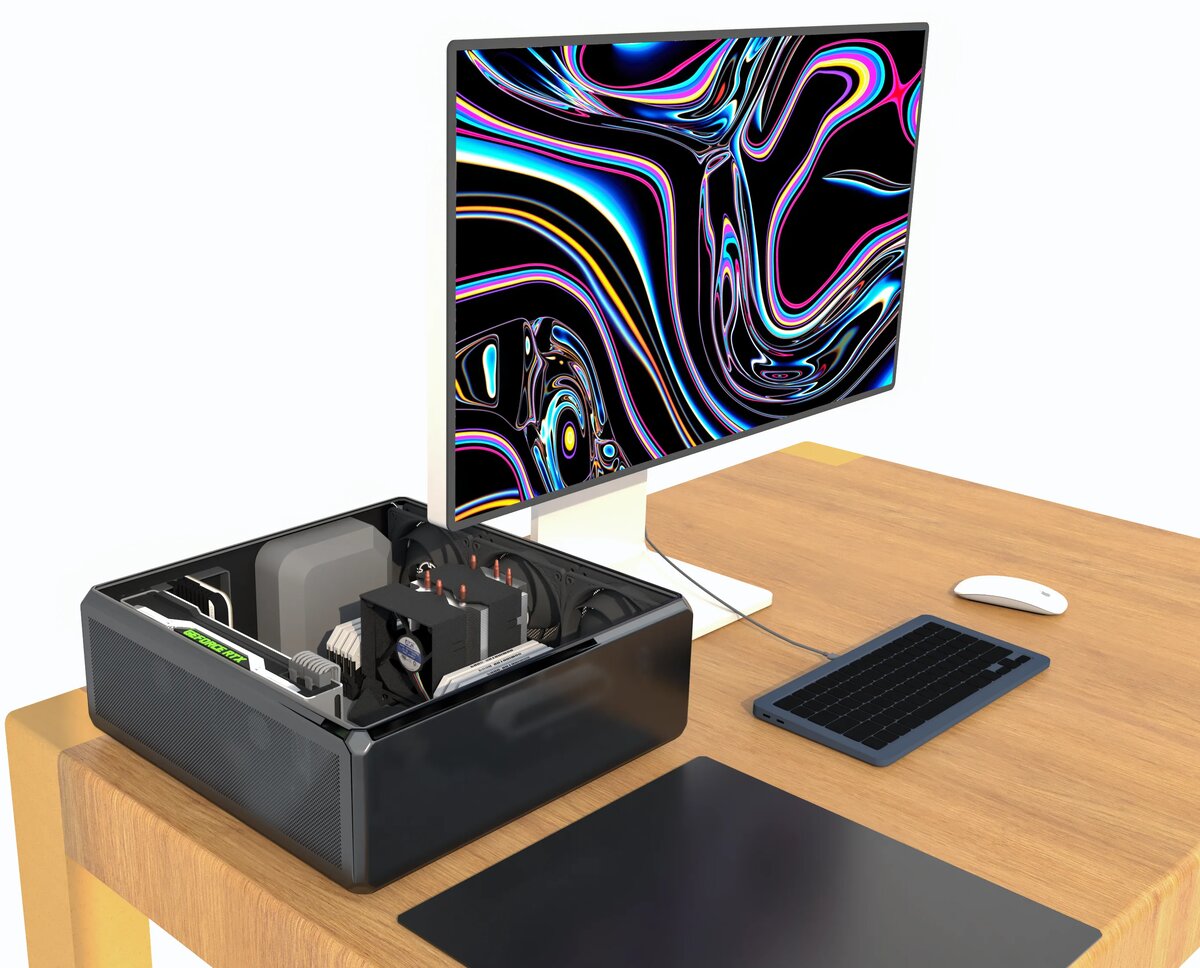
What “runs locally” means here
Meta says it’s the first model in its class that runs on a desktop, using two Apple M5 Ultra Mac Studios and the MLX framework. TechCrunch, citing Engadget, puts the floor at a terabyte of RAM.
Two maxed-out Mac Studios is a lot of things. A desktop is not really one of them.
This isn’t a complaint about the model. It’s worth being precise about what changed, because “open weights you can download” and “a model you can actually run at home” are two different claims and only the first one is true today. The weights being public matters for auditability, for fine-tuning, for not being locked to one vendor’s API. None of that requires that you personally can run it in a closet.
For anyone actually self-hosting inference, the practical lineup hasn’t moved much. You’re still running something in the 7B to 70B range on hardware you own, through llama.cpp or vLLM, and making real tradeoffs about quantization and context length to fit it. We wrote about that a while back and the ceiling has gone up since, but not to 816 billion parameters.
The more interesting part
Muse Spark Open is deliberately not Meta’s best model. It shares a base with Muse Spark 1.3, got extra safety post-training for the open release, and sits below Muse Wonder, which Meta introduced the same week and kept closed.
Alexandr Wang said the company will generally not open-source its most powerful models, citing safety and capability. That’s the sentence worth filing away. The open-weight tier is now an explicit product decision with a stated ceiling, not a philosophical commitment that happens to lag.
Which is fine, and also worth naming. “Open” in open-weight AI has quietly come to mean “the strong-but-not-strongest one, released on a license we wrote.” Meta’s own license, the Muse Model License, is not an OSI-approved open source license and nobody should call this open source.
Where that leaves us
Good release, genuinely. An 816B model with public weights and a million-token context is a real thing to have in the world, and the distribution is broad: SageMaker, Google Cloud Model Garden, Hugging Face, Microsoft Foundry, plus a pile of API providers.
But if the reason you care about open weights is that you want to own the thing you depend on, the number to watch isn’t parameter count. It’s whether the best model you can actually run on hardware you can actually buy is getting better. That number is improving a lot slower than the headline one.
Sources: Meta’s own announcement, TechCrunch on the local hardware requirements, the PyTorch write-up.